Plant Systems Biology. Our goal is to identify gene regulatory networks in plants using a combination of genetic, genomic, bioinformatic, and systems biology approaches.

Our lab has two main areas of inquiry:

1. A systems approach to nitrogen networks & the Virtual Plant.  

2. Comparative genomics of seed evolution. 

All published experiments can be accessed by clicking here

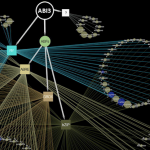
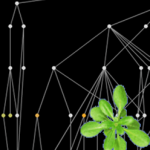
A Systems Approach to Nitrogen Networks & the VirtualPlant. The long-term goal of this project is to understand how internal and external perturbations affect gene regulatory networks that link plant metabolism and development. Succeeding in this endeavor will allow us to (1) explain mechanistically how changes in gene networks evoke systems-wide responses to external treatments such as nitrogen, and (2) to predict network states under untested conditions or in response to modifications. In the long term, this systems biology approach to gene networks should enable researchers to test the effects of biotechnological strategies for gene modifications in silico, prior to implementation in transgenic plants.  Our approach starts with the integration of all available information on Arabidopsis genomic data into a "multinetwork" where the "edges" connecting gene "nodes" are supported by multiple evidence including: metabolic pathway connections, protein:protein and protein:DNA interactions, microarray data, microRNA:target datasets, and literature-based interactions.  At present, the Arabidopsis multinetwork we have created  contains approximately 7,000 gene nodes and 230,000 interactions between them.  As proof-of-principle, we have used this Arabidopsis multinetwork to identify the gene networks controlled by light, carbon and nitrogen signals.   In selected cases, the networks identified in wild-type plants have been validated using microarray data from Arabidopsis signaling mutants.  Our studies include analysis of gene networks in specific organs (leaves, roots or seeds) or in specific cell-types based on analysis of microarray data obtained from cell-sorted samples of roots.
Click on the links below to learn more:

The VirtualPlant Project. In order to go beyond data integration to conceptual integration of genomic data, we recognize that scientists pattern recognition skills often lead to the most enduring qualitative biological insights. To support those skills in a data-rich environment, have implemented a set of data integration, analysis and visualization tools into a system called the "VirtualPlant" (www.virtualplant.org).   This system encompasses visualization techniques that render the multivariate genomic information in visual formats that facilitate the extraction of biological concepts and enable a "Systems Biology" view of the genomic data.  While our project relates specifically to Arabidopsis, the data structures, algorithms, and visualization tools we have developed have been designed in a species-independent fashion.  Thus, with the proper data uploads, the system can be used to visualize and model the molecular basis and underlying genomic responses in any organism for which genomic data is available.

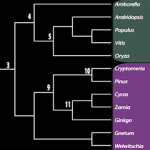
Comparative Genomics of Seed Evolution. This NSF Plant Genome project (NSF DBI-0421604) involves the comparative genomic analysis of non-model, non-crop species, to uncover genes important to the evolution of seeds, an important agronomic trait. This project is being conducted with our partners in the NY Plant Genomic Consortium that include coPIs from NYU Biology (Coruzzi), NYU Courant (Shasha), NYBG (Stevenson), AMNH (DeSalle) and CSHL (McCombie & Martienssen).   Our approach is to generate and mine EST data from the the most primitive living-seed plants, the nodal Gymnosperms and the heterosporous lycophyte, Selaginella (as an outgroup), to resolve their phylogenetic relationship and to uncover novel genes and characters associated with the evolution and development of seeds. This project is being conducted collaboratively by scientists at three NY area institutions specializing in evolution, genomics and bioinformatics, who comprise The New York Plant Genomics Consortium (www.nypgenomics.org).  Participants in this project include PIs who collaborate in the training of post docs and graduate students from New York University, The New York Botanical Garden, Cold Spring Harbor, and The American Museum of Natural History.

We aim to achieve four goals:

1. Evolutionary Genomics: We have generated 18,437 ESTs from three "nodal" Gymnosperm species which have enabled us to create genome-scale phylogenies to resolve evolutionary relationships in the Gymnosperms and identify putative genes involved in the evolution of seeds.

2. Phylogenomics/Informatics: We developed new informatic tools to automate orthology determination in a parsimony framework and the construction of phylogenomic scale trees.  These tools include: Ortholog ID, ViCoGenta (Viewer for Comparing Genomes to Arabidopsis), and a newer tool under development ASAP (Automatic Systematic Analysis Program).

3. Functional Genomics: To test the function of genes supporting the node for seed plant evolution we have begun to test the expression in Gymnosperm tissue and perform analysis of Arabidopsis mutants in orthologous genes.